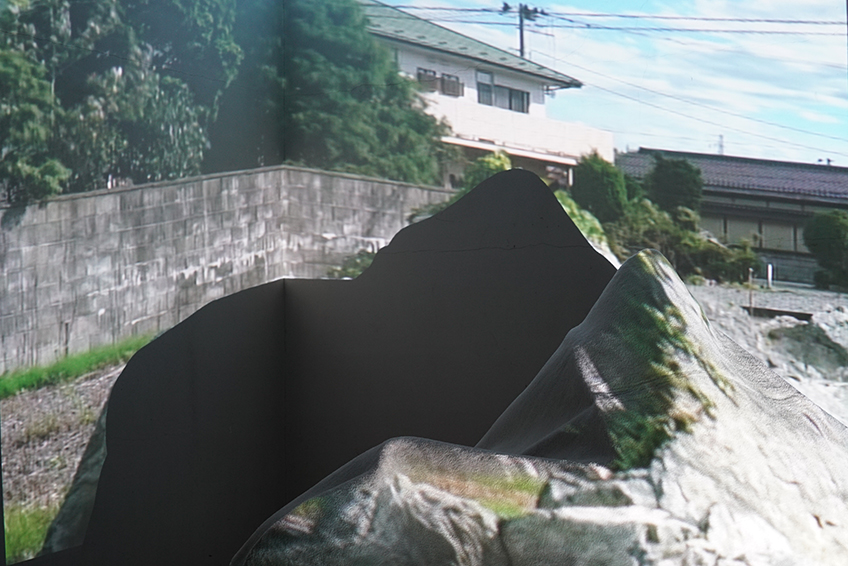
Installation view of "Not Here," at "Fukushima Biennale 2018," Concrete Storehouse of the Takashima Residence, Odaka Ward, Minamisoma, 2018.
ここではない
Not Here
STATEMENT
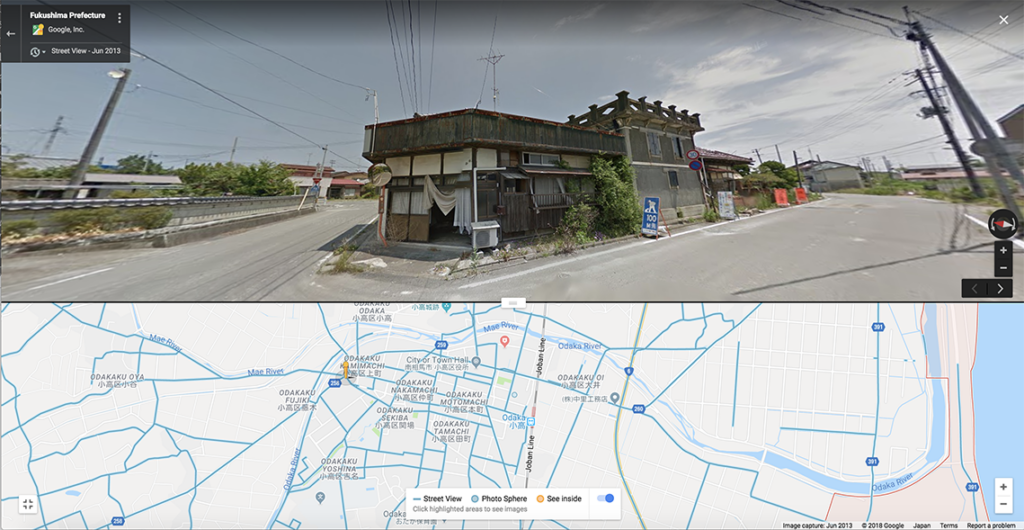
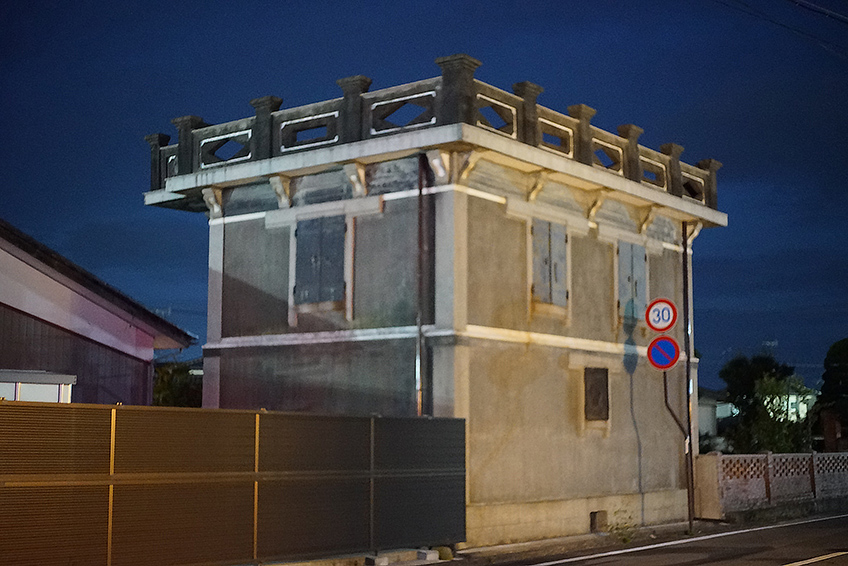
本作は、福島県南相馬市小高区上町にある髙島家住宅のコンクリート蔵を会場として制作された。JR常磐線小高駅から徒歩約15分の場所に位置するこの建物は、大正12年(1923)の関東大震災後に普及したコンクリート建築の技術を取り入れ、昭和初期に建てられた蔵である。黒と白の漆喰装飾やパラペット、外階段の踊り場に残る紋章など、職人による多様な意匠が現在も残されている。
小高の町を歩くと、家々はまばらで、かつての生活の痕跡と現在の風景とが重なり合って現れる。立ち入り制限区域であった時間を経て、ここで暮らし続ける人々と、別の場所で生活を続ける人々の選択と時間が、同時にこの場所に現れている。そのあり方は、輪郭だけが残された舞台のように、複数の物語が並行して進行しているようにも見える。
空地には砂利が敷かれ、その上に大きな庭石だけが取り残されている場所がある。かつてそこに家や庭があったことを示しながらも、それらはすでに失われている。庭石は処分されることなく、その土地にとどまり続け、失われた生活との関係だけを残している。一方で、蔵の内部には、この場所で長く使われてきた家具や道具が押し込められている。人の気配が濃密に残されているにもかかわらず、現在そこに人はいない。それは「人がいるが、誰もいない場所」である。
これら二つの風景は、ともに不在を示しながらも、その質は異なる。庭石のある空地は、「ここにはいない」という選択の結果として現れ、そこに暮らしていた人々が別の場所で生活していることを前提としている。他方、蔵の内部は、かつての生活が圧縮されたまま残され、いまここにいない人々の痕跡によって満たされている。
『Not here』は、これらの風景に現れる不在の差異に触れながら、「ここにいないこと」と「ここではないどこかにいること」のあいだにある距離を捉えようとする試みである。
砂利が敷かれた空地に残された自身の背丈を超える庭石を撮影し、その像を蔵の内部へと持ち込んだ。蔵の中では、庭石のかたちに重なるように家財道具を積み上げ、その上から長い不在に掛けられるような白い布を覆う。そこに映像を投影することで、外に取り残された庭石と、内に蓄積された生活の痕跡とが、ひとつの像として立ち現れてくる。
This work was created in a concrete storehouse belonging to the Takashima family, located in Kamimachi, Odaka District, Minamisoma City, Fukushima. About a 15-minute walk from Odaka Station on the JR Joban Line, the building was constructed in the early Showa period, incorporating concrete construction techniques that spread rapidly after the Great Kanto Earthquake of 1923. Decorative elements by plasterers—such as black-and-white stucco ornamentation, parapets, and a crest on the landing of the exterior staircase—still remain.
Walking through Odaka, the houses are sparse, and traces of past lives overlap with the present landscape. After a period as a restricted zone, the choices and temporalities of those who continue to live here and those who now live elsewhere appear simultaneously. The town itself resembles a stage where only outlines remain, as if multiple narratives were unfolding in parallel.
In vacant lots, gravel covers the ground, and only large garden stones remain. They suggest the former presence of houses and gardens, now gone. The stones are not removed but left behind, continuing to occupy the land while retaining only their connection to lives that have disappeared. Inside the storehouse, by contrast, furniture and tools that once supported daily life are tightly packed together. Although the presence of people is strongly felt, no one is there now. It is a place where people are present, yet no one is.
These two landscapes both indicate absence, but in different ways. The vacant lots with garden stones are the result of a decision not to be here; they presuppose lives that continue elsewhere. The interior of the storehouse, on the other hand, holds a compressed accumulation of past life, filled with the traces of those who are no longer present.
"Not here" attempts to engage with these differing forms of absence, tracing the distance between “not being here” and “being somewhere else.”
I photographed a garden stone, taller than my own height, left in a gravel-covered lot, and brought its image into the storehouse. Inside, I stacked household items so that they echoed the shape of the stone, and covered them with a white cloth, as if placed over something left unattended for a long time. By projecting the image onto this surface, the stone left outside and the accumulated traces of life inside begin to emerge together as a single image.